
Appreciating The Photographs of Artemis II
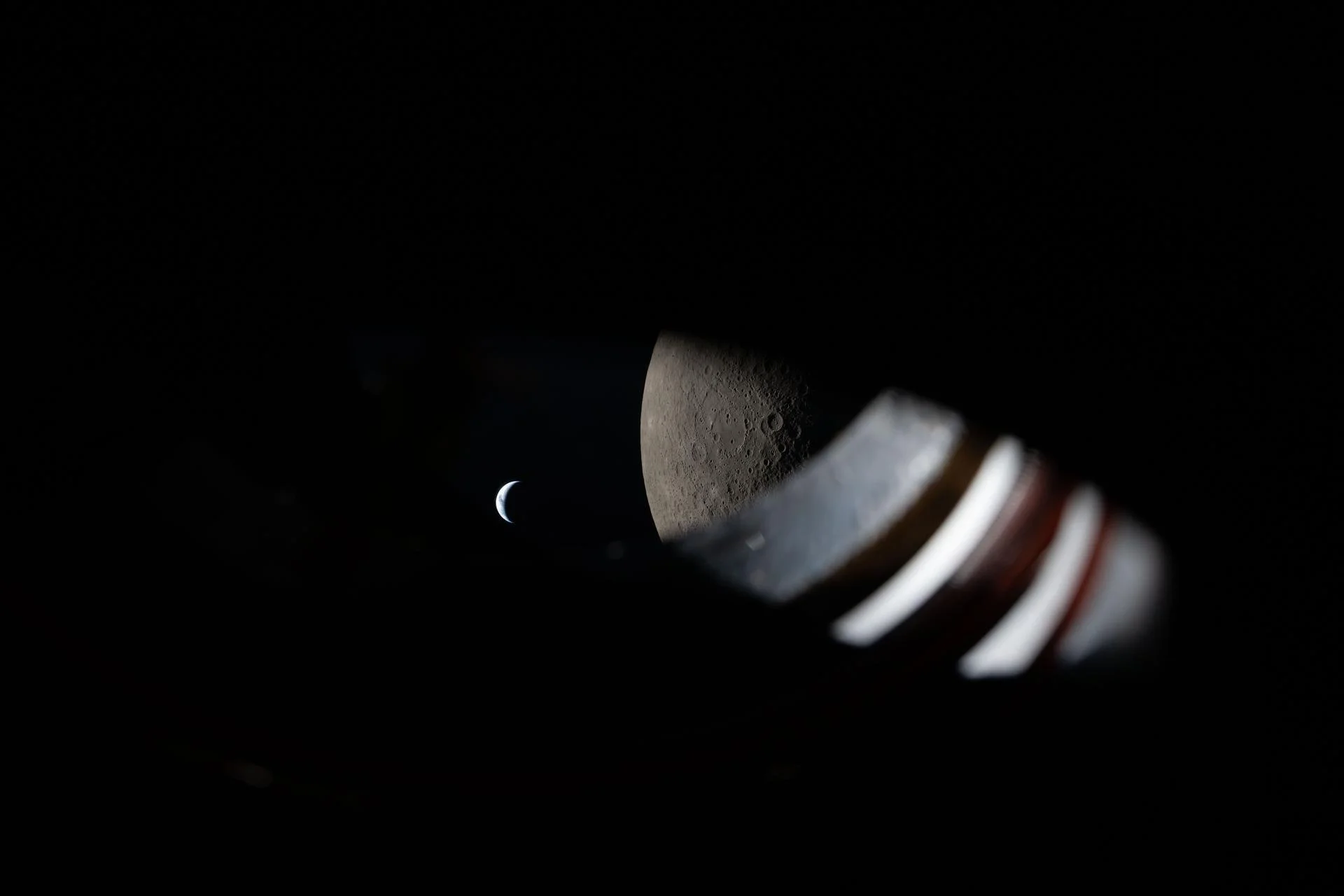
“A Room With a View”
It’s only been a little over a week since Artemis II returned safely back to Earth. Since then we’ve been treated to some of the most poignant photographs ever taken from space.
Certainly this is high praise. The Apollo missions in particular returned some of the most important and beautiful images in history. Of course “Earth Rise” put its inhabitants in a perspective that hadn’t truly been experienced before. Other photographs taken from the Apollo missions were also quite arresting.
Humanity’s most recent spin around the moon, however, has returned images that pay some service to reflect the changes in photography between now and the 54 years since we last visited our nearest heavenly neighbor.
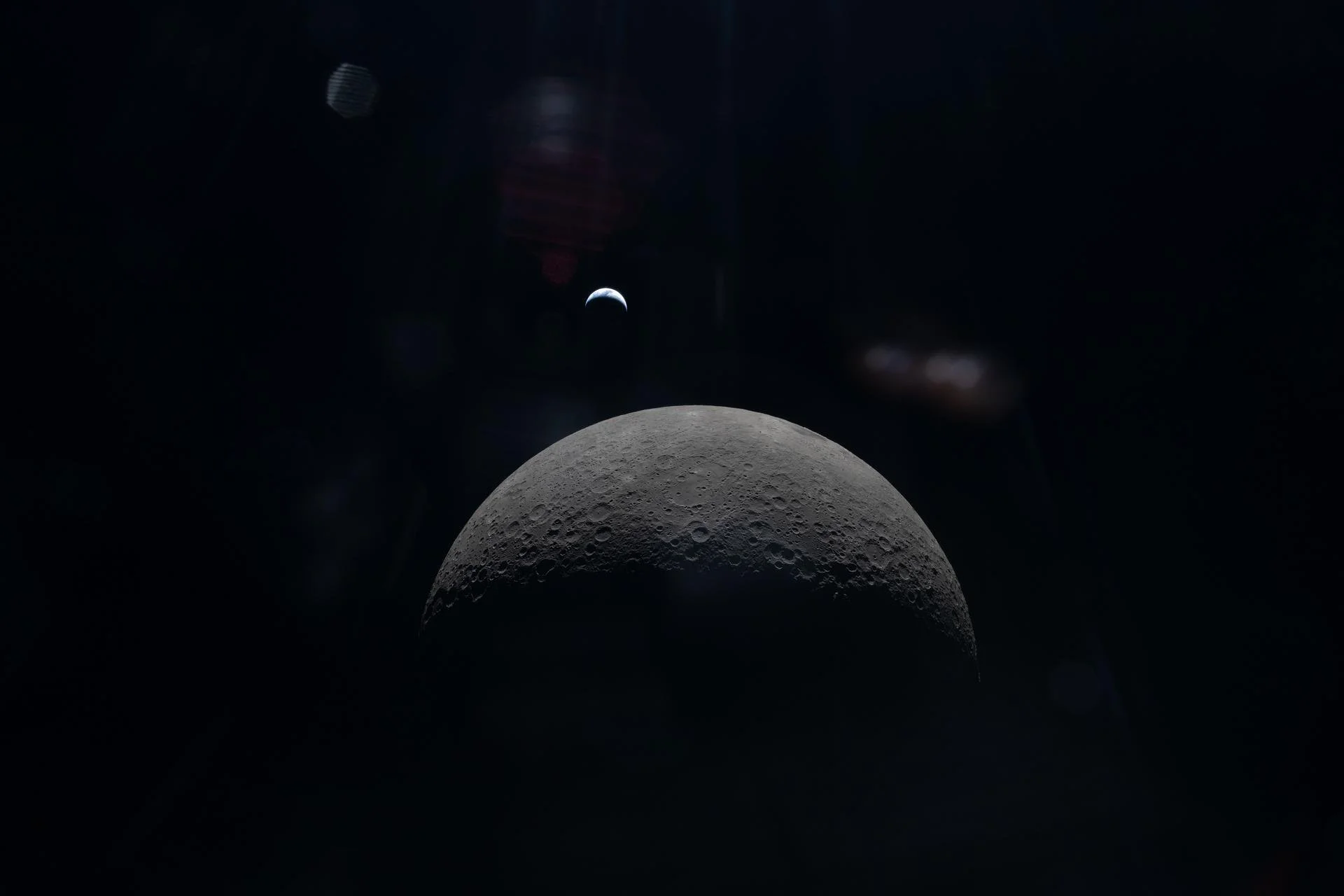
“Crescent Earth Over Lunar Horizon”
All astronauts that have been to the moon have undergone training in photography. The four members of the Artemis II mission received roughly 20 hours of photo education. The images we’ve been treated to certainly show that attention, and also seem to reflect the time in which they were taken to an impressive degree.
The photograph of the moon (above) with the subtle lens flare off the window in the foreground, for example, feels particularly modern and very much like it could have been a cinematic still frame. The reflection off the window makes the viewer aware of the window’s presence and creates depth by acknowledging the glass. It also breaks up the deep blackness of the background void without polluting the profound effect of the negative space that paves the way for a powerfully center framed crescent moon. The softness of the pastel colored flares stands in contrast to the sharp details of the moon’s cratered, monotone surface. The result is a simple yet dynamic image. It also adorns my desktop wallpaper.
The below image, captured by a camera from the exterior of the Orion spacecraft is another example of an image I don’t feel as though we’ve been treated to the likes of before. The earth reflects light onto the left side of the moon while the sun, being eclipsed by the moon, illuminates a fogginess that is still of unknown origin- perhaps either dust, part of the solar corona, or both as described by NASA’s caption of the image. This feels like atmosphere in the cold harshness of space. So often we see images of the moon and earth positioned against the deep blackness of space; a cold and hard light clear of any ambient fog or “atmosphere”. Here, however, we get a visualization that so many movies, art, and video games have sought to communicate- a low contrast ambiance in space that puts the heavenly bodies not in a visually cold vacuum, but in an aesthetically satisfying illuminated medium.
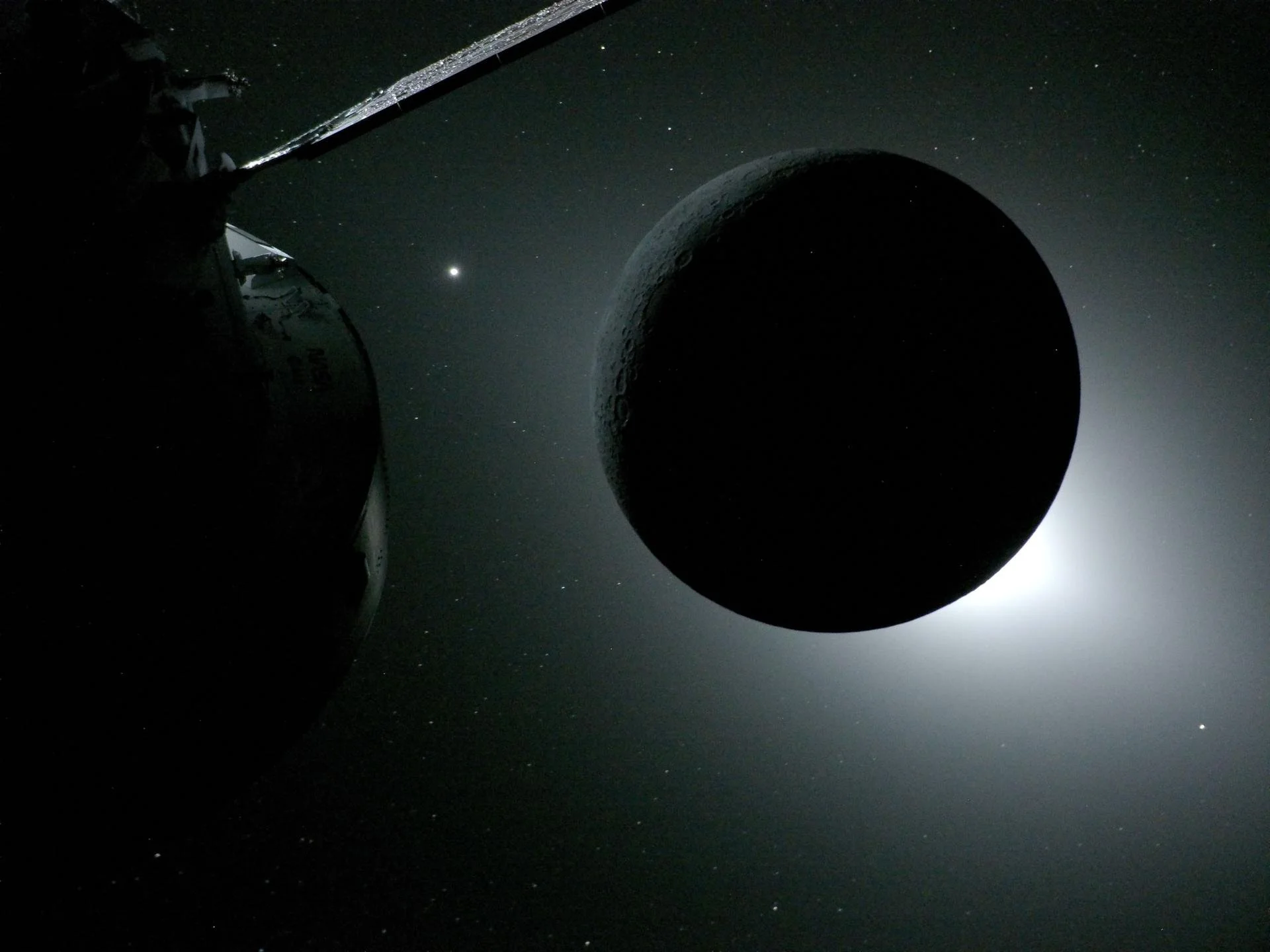
“Orion and the Eclipse”
The Orion spacecraft to the left of the image is presented in a way that many exterior views of previous spacecrafts have not been before. Here, the camera is mounted to one of Orion’s solar array wings. This positioning gives us some distance from the chassis of the spacecraft and lets us see more of it than we would if the camera had been mounted directly to Orion’s exterior surface. We’re treated to the craft’s gentle curve below a sharply protruding diagonal fin, (what I assume is a solar panel). This feels very insect like, and very similar to the recent cinematic interpretation of the “thopters” in the Dune series. We’re given just enough of the vehicle to begin to understand its form, yet it is still abstracted to this unusual shape. The combination of the unique view of the spacecraft along with the atmospheric quality of the eclipsed moon make for an astounding image that feels like it is, again, from modern cinema.
Other photographs feel no less cinematic and continue to use the visual tool of depth to great effect.
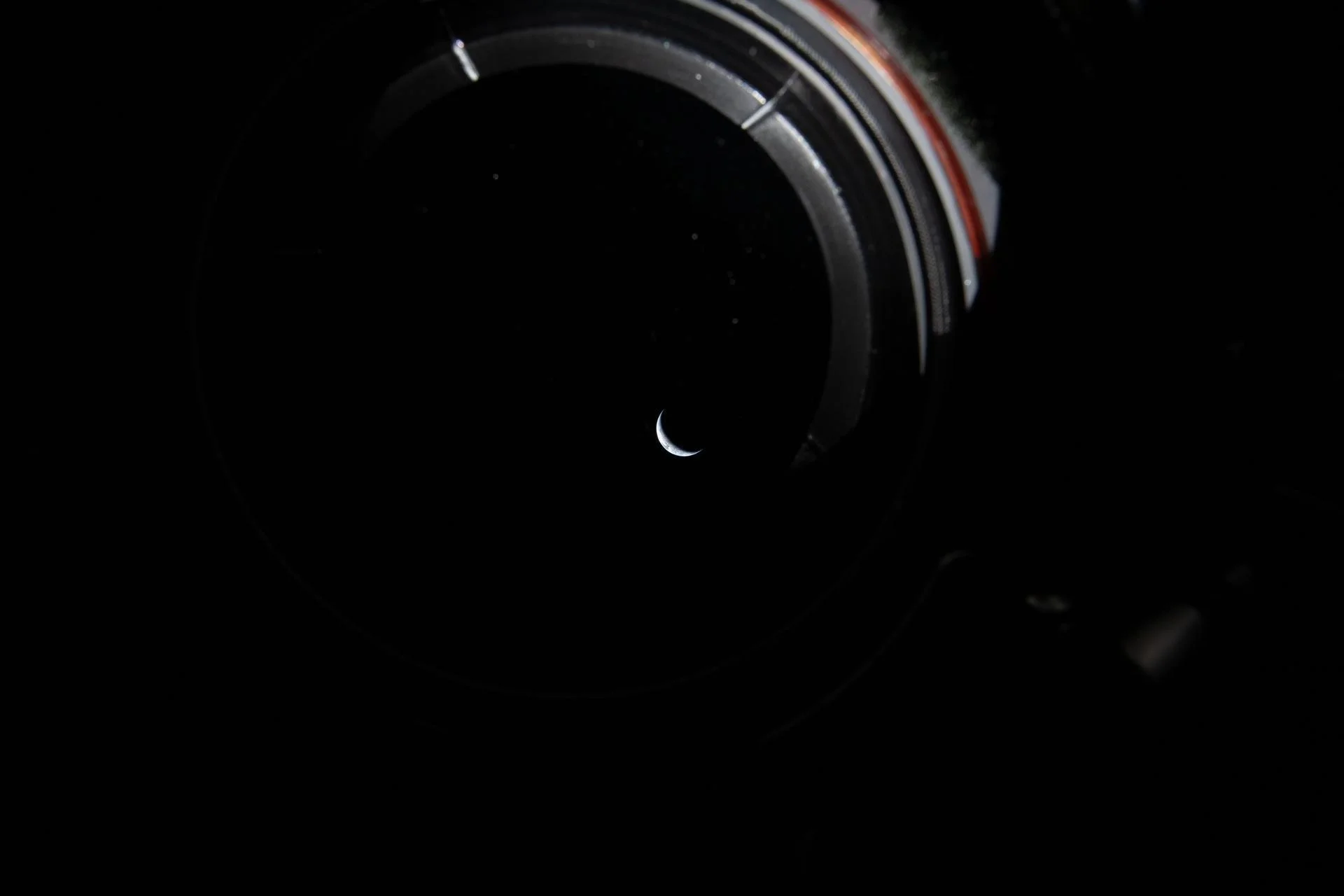
“A Peek at Earth”
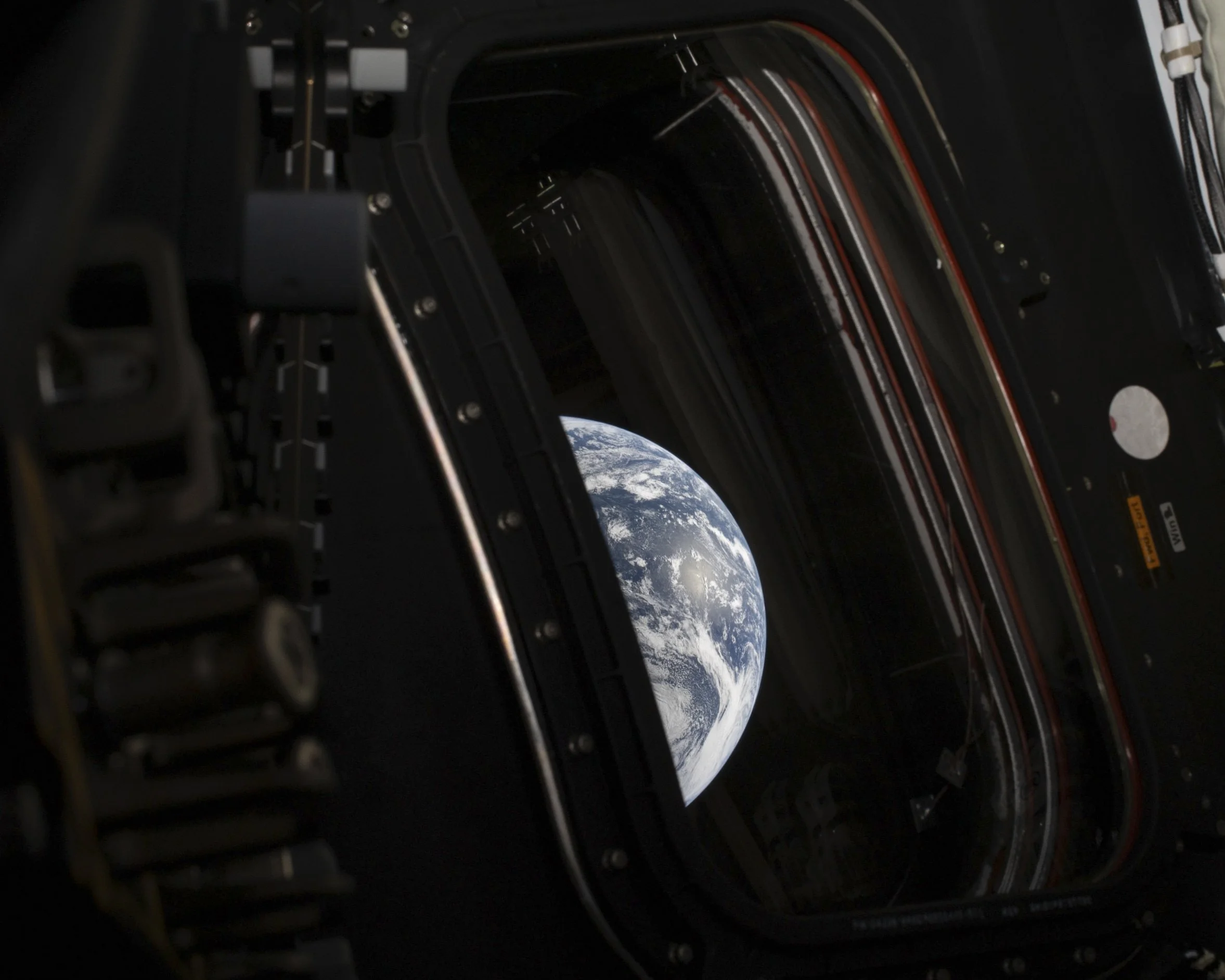
“Artemis II Looking Back at Earth” (Cropped)
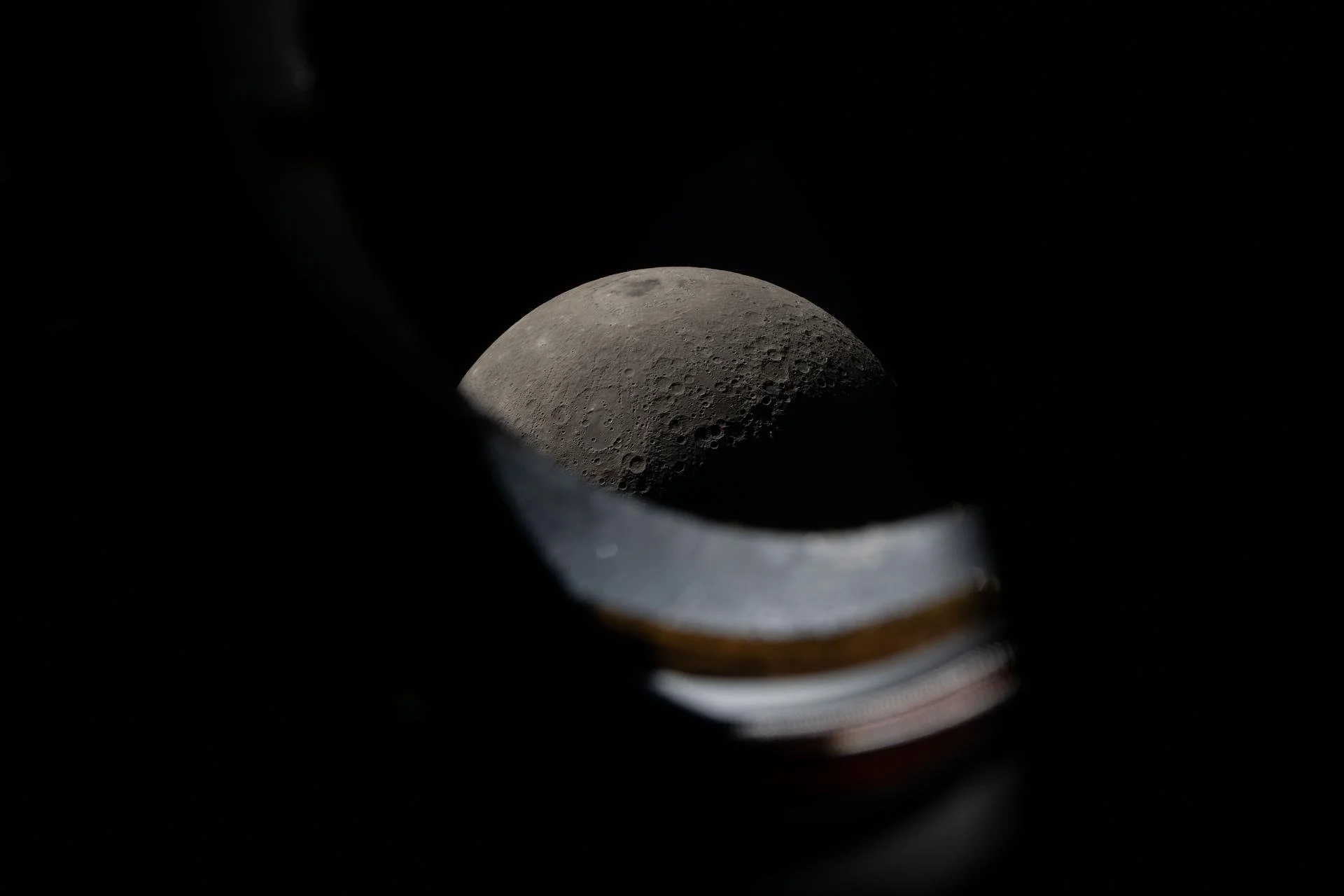
“Sill Life”
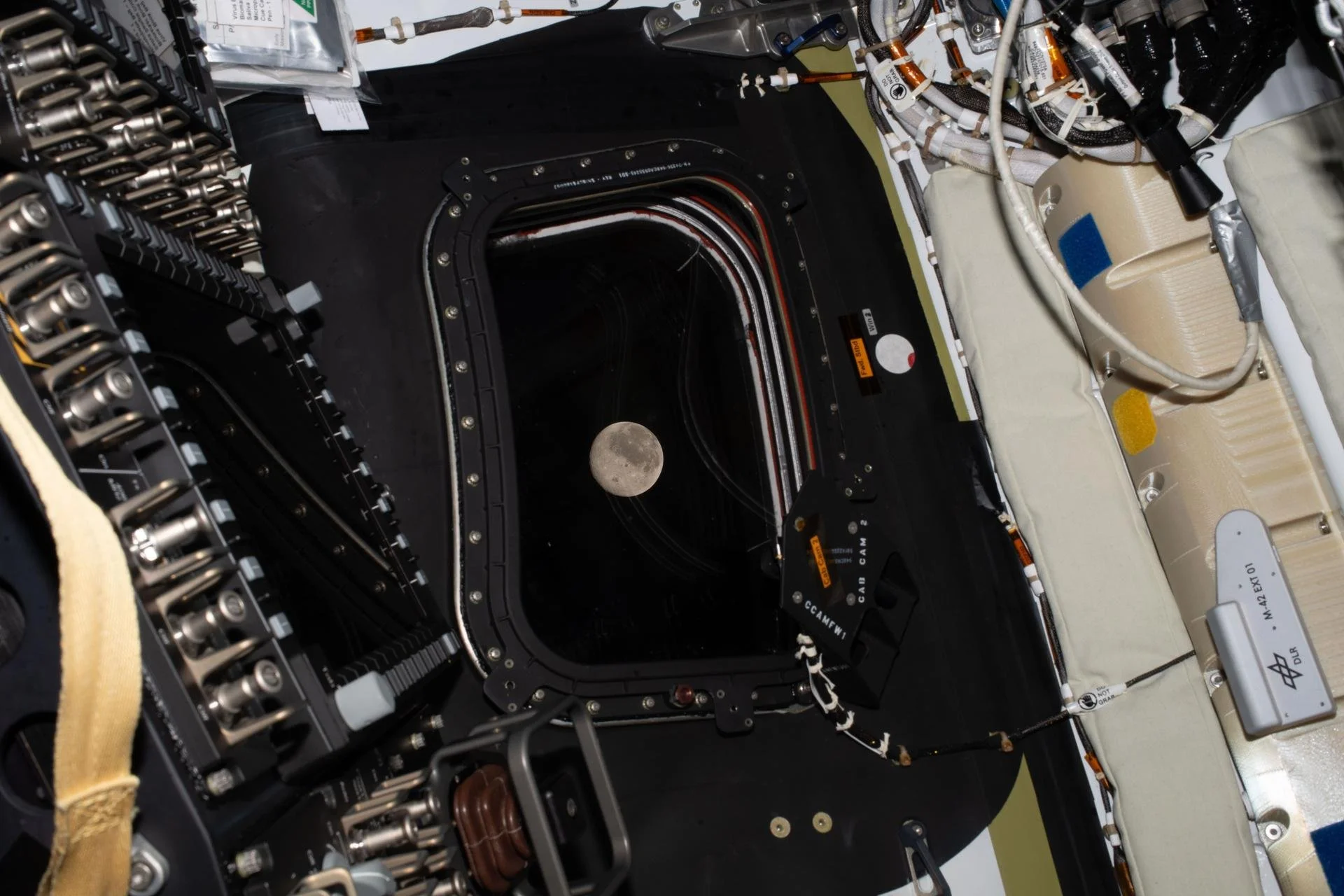
“Goodnight Moon”
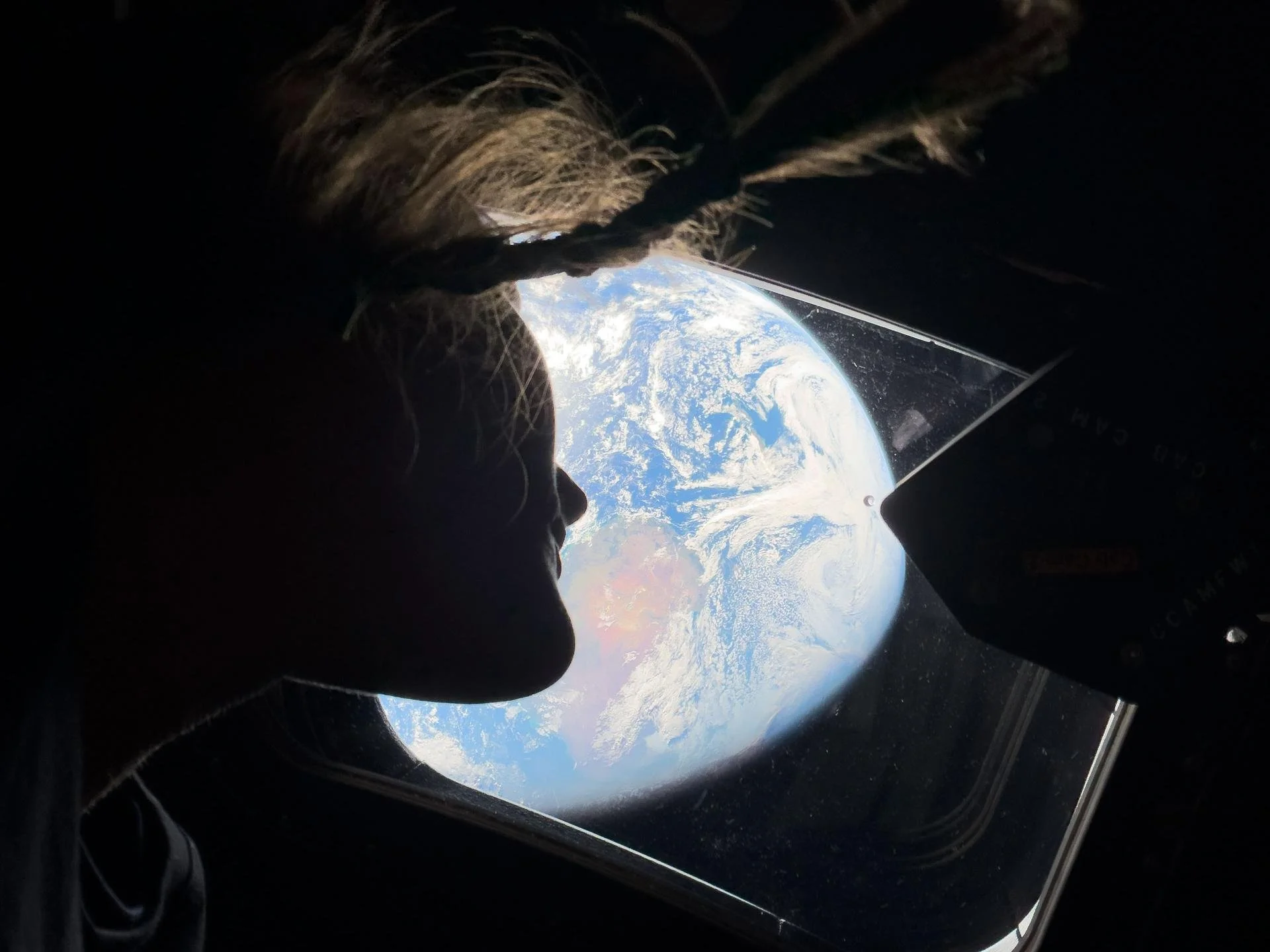
In the above images, the earth is framed by a window, a direct nod to fact that an image is not being taken from an exterior camera, but from within the spacecraft. This gives us a sense of what the astronauts are seeing, as well as, again, creating depth in the image. The window, and by extension the vehicle, as well as the frame of reference of the astronauts, are just as much the subject of the photograph as the objects outside it. When compared with the images taken from the manned Apollo missions, most if not all inclusions of an interior window when photographing an outside subject appear to be incidental and unintentional. The Artemis II astronauts, however, have chosen this view repeatedly.
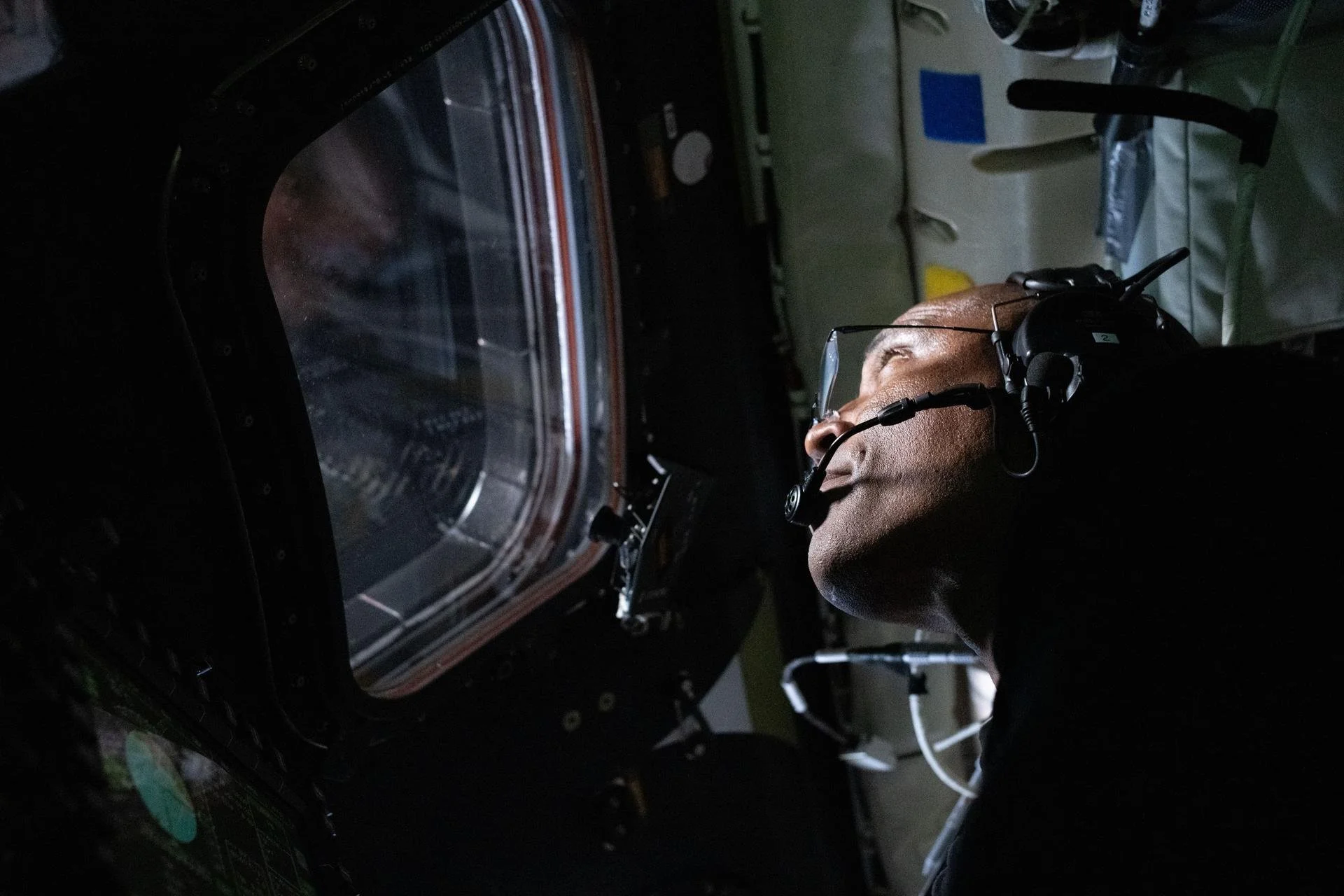
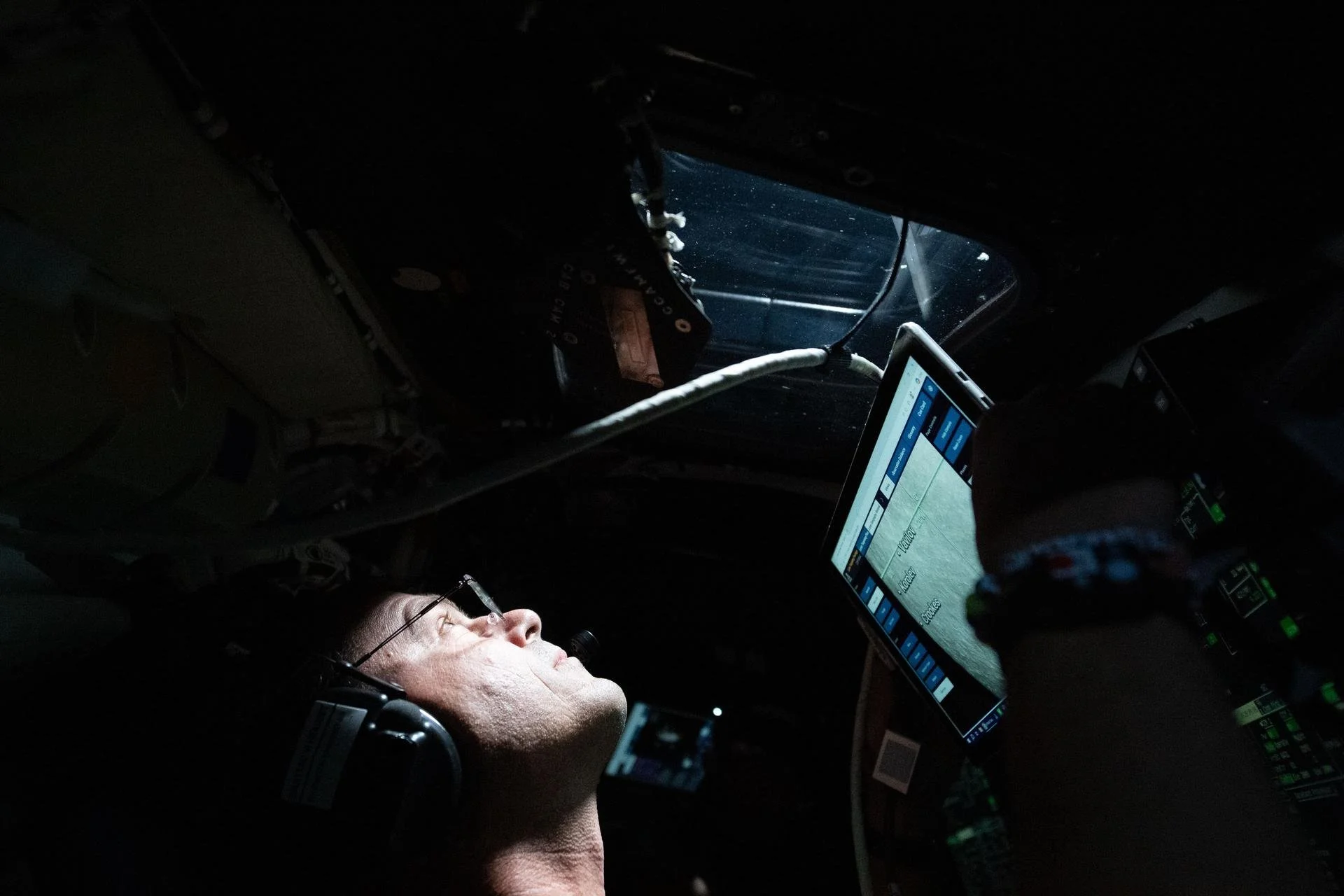
These images humanize the mission in an interesting way- we are given the direct view of the astronaut as if we were there in spacecraft. It speaks to the experience of the astronauts and asks us to think of the feelings they must be feeling- to consider what it must be like not just to see the moon and earth closer than we can on earth’s surface, but to inhabit the state of mind of a human hurtling through space in a container experiencing things humans aren’t meant to experience. Aesthetically, the out of focus rim of the window and surrounding elements contrasted with the defined features of the earth and moon make for engaging, artful photographs.
Of course, plenty of images were captured that do not reference the spacecraft or vantage point of the people inside it.
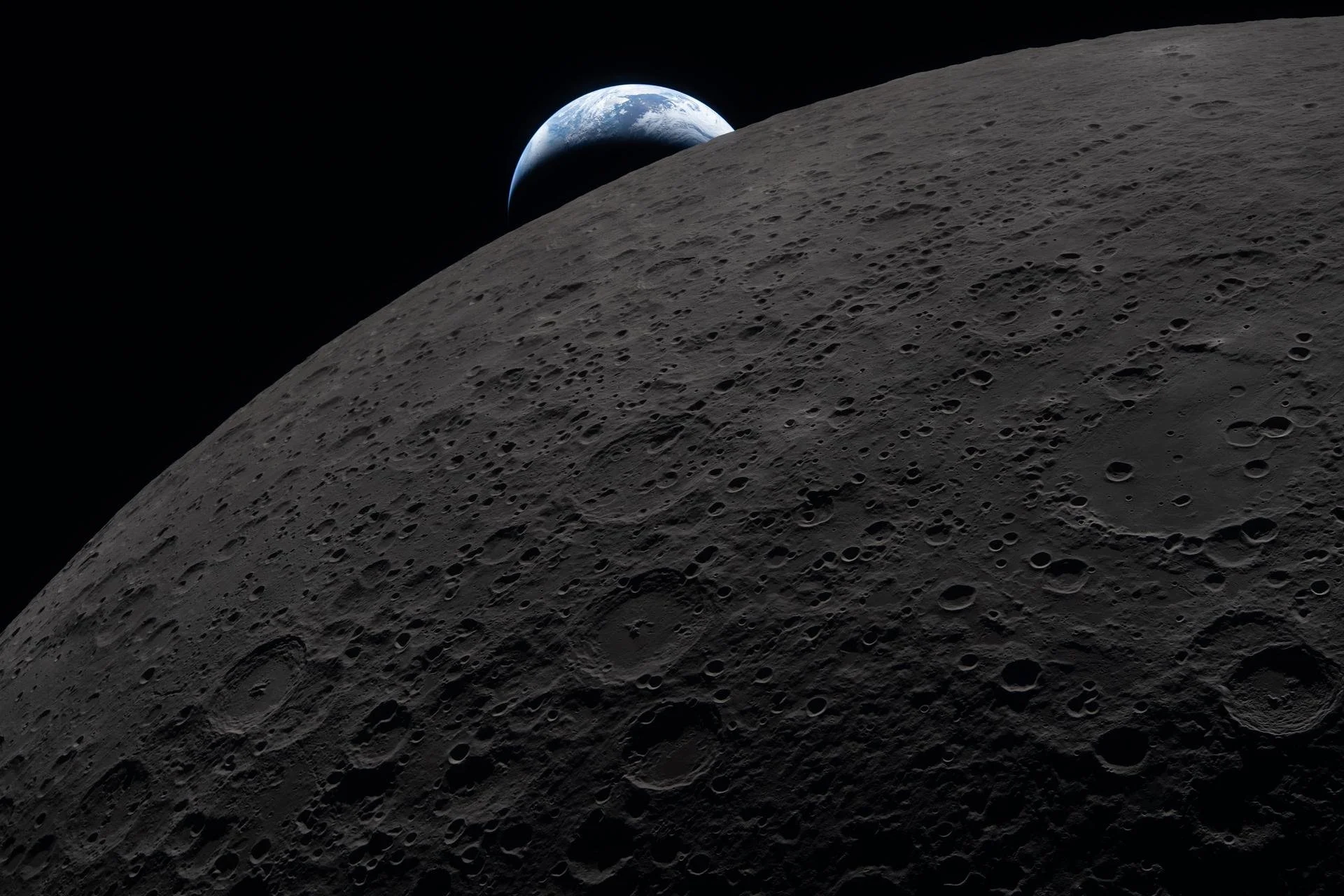
“Earthset on the Far Side”
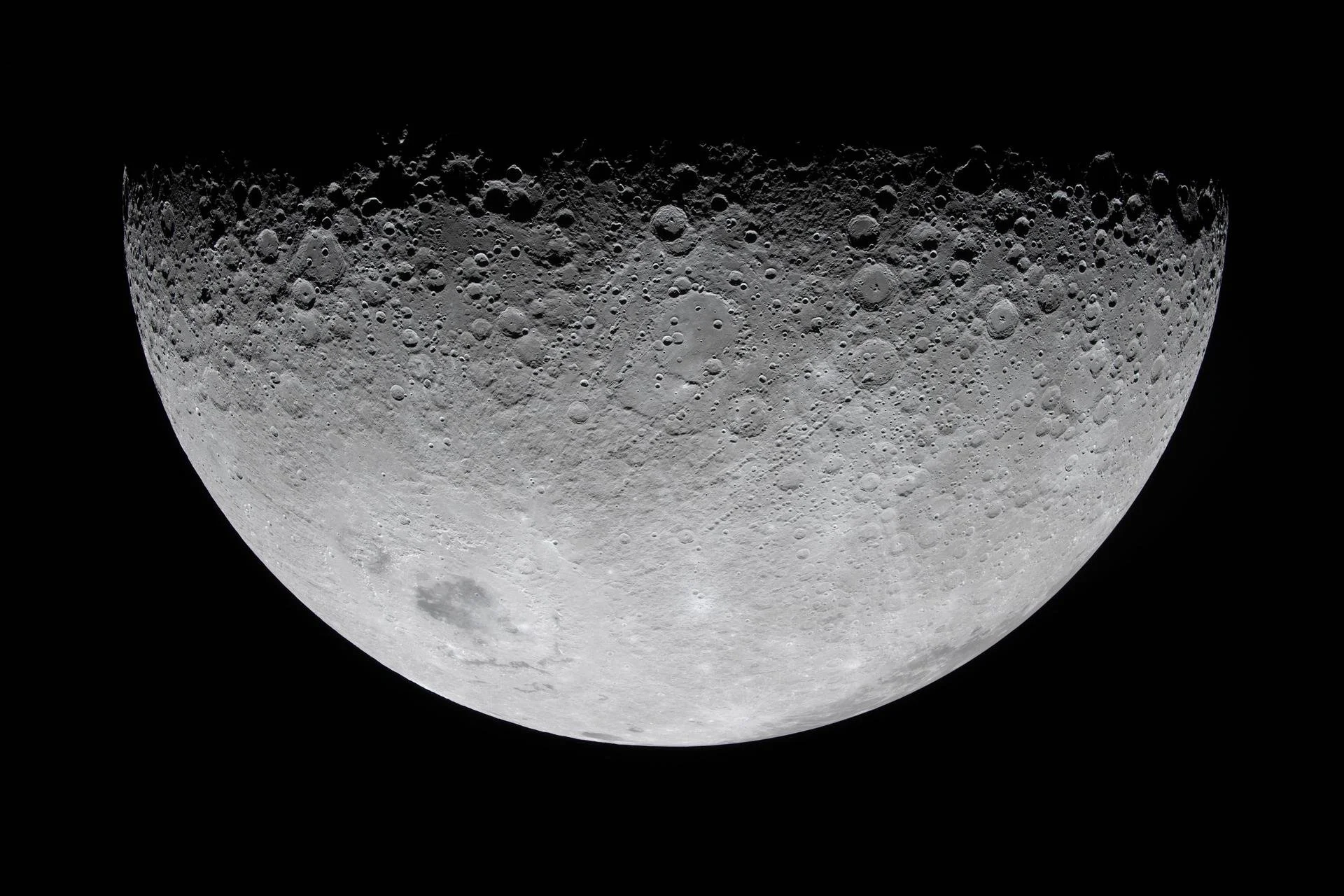
“The Edge of Darkness”
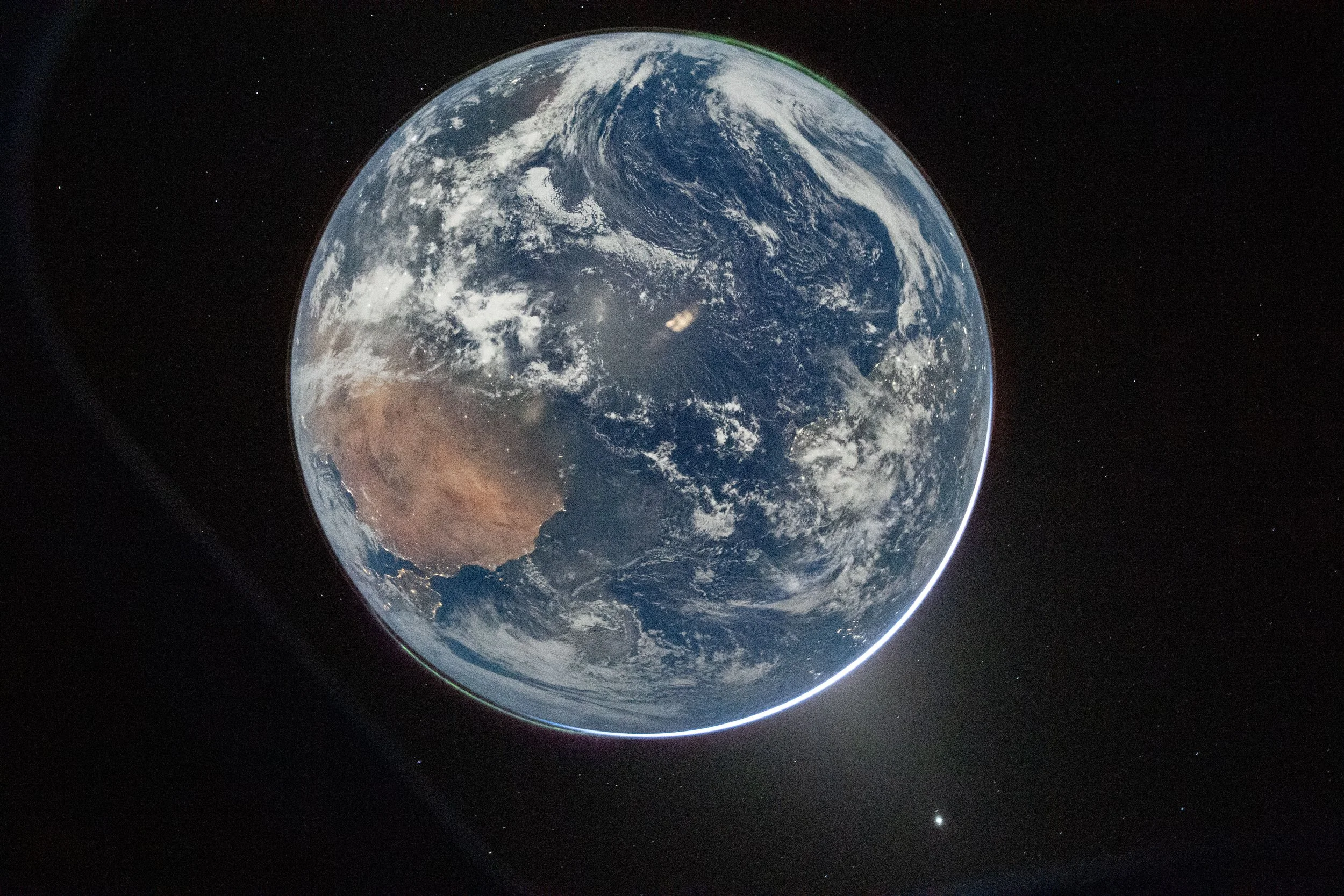
“Hello, World”
The above photographs do not directly reference the astronauts or their vehicle as the others have, but are themselves intensely beautiful images of the moon and earth. In particular, “Hello World” offers a view that we have not fully seen before. The earth’s night side, illuminated presumably from moonlight and with great increases in sensitivity on part of the camera, show cities illuminated, zodiacal light, and two sets of auroras, all with astonishing clarity despite the high ISO.
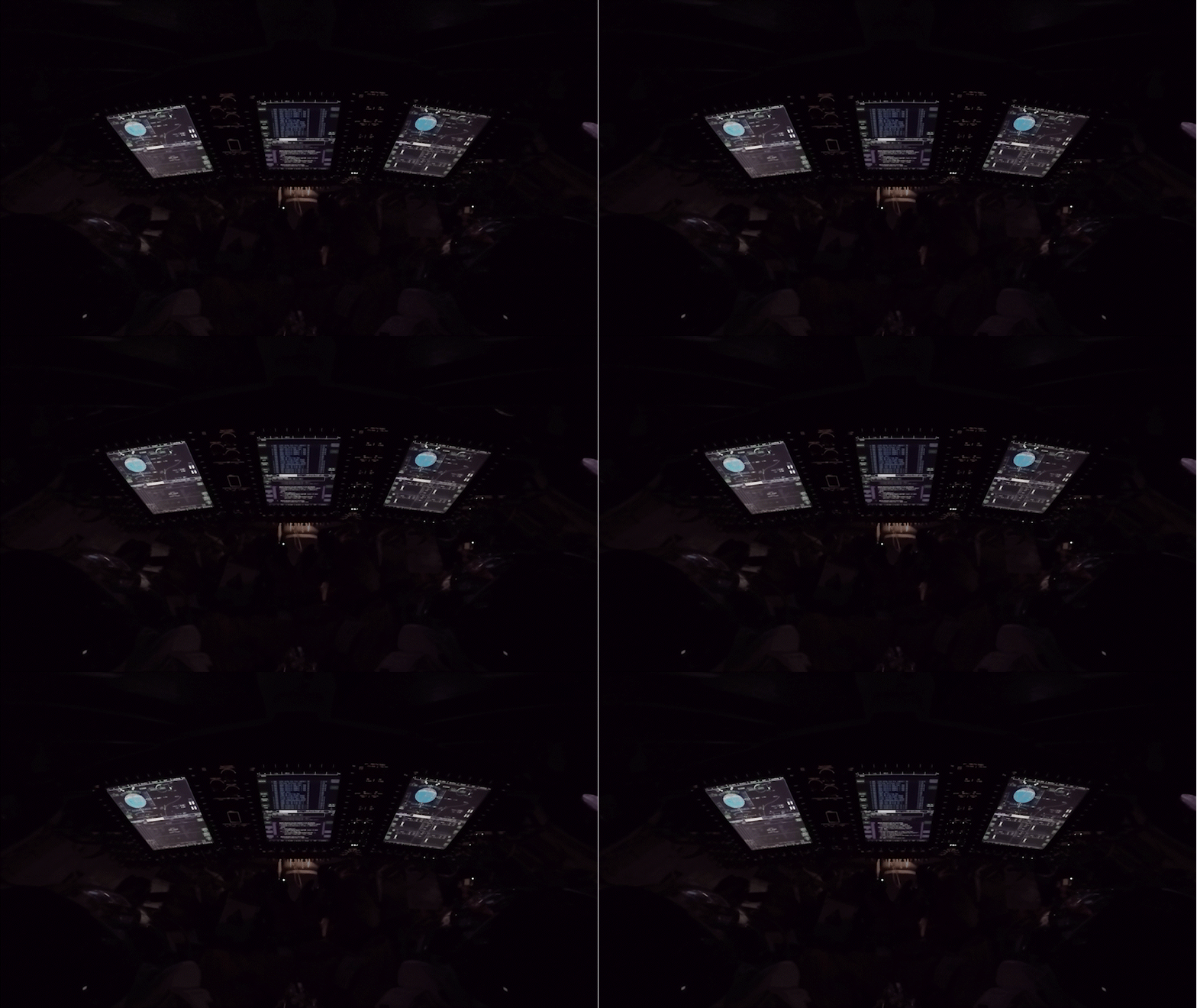
Gif made from a video just before the emergency abort capsule ejected.
The photographs returned from this mission have not disappointed. We should all be grateful for the attention and care taken to not just document but create artful captures from such a monumental undertaking. The four astronauts on this mission should be commended for their enormous accomplishment of innumerable, difficult tasks, but also for their attention to detail and willingness to make photographs that communicate far more than what the camera recorded.
We have been given a gift.
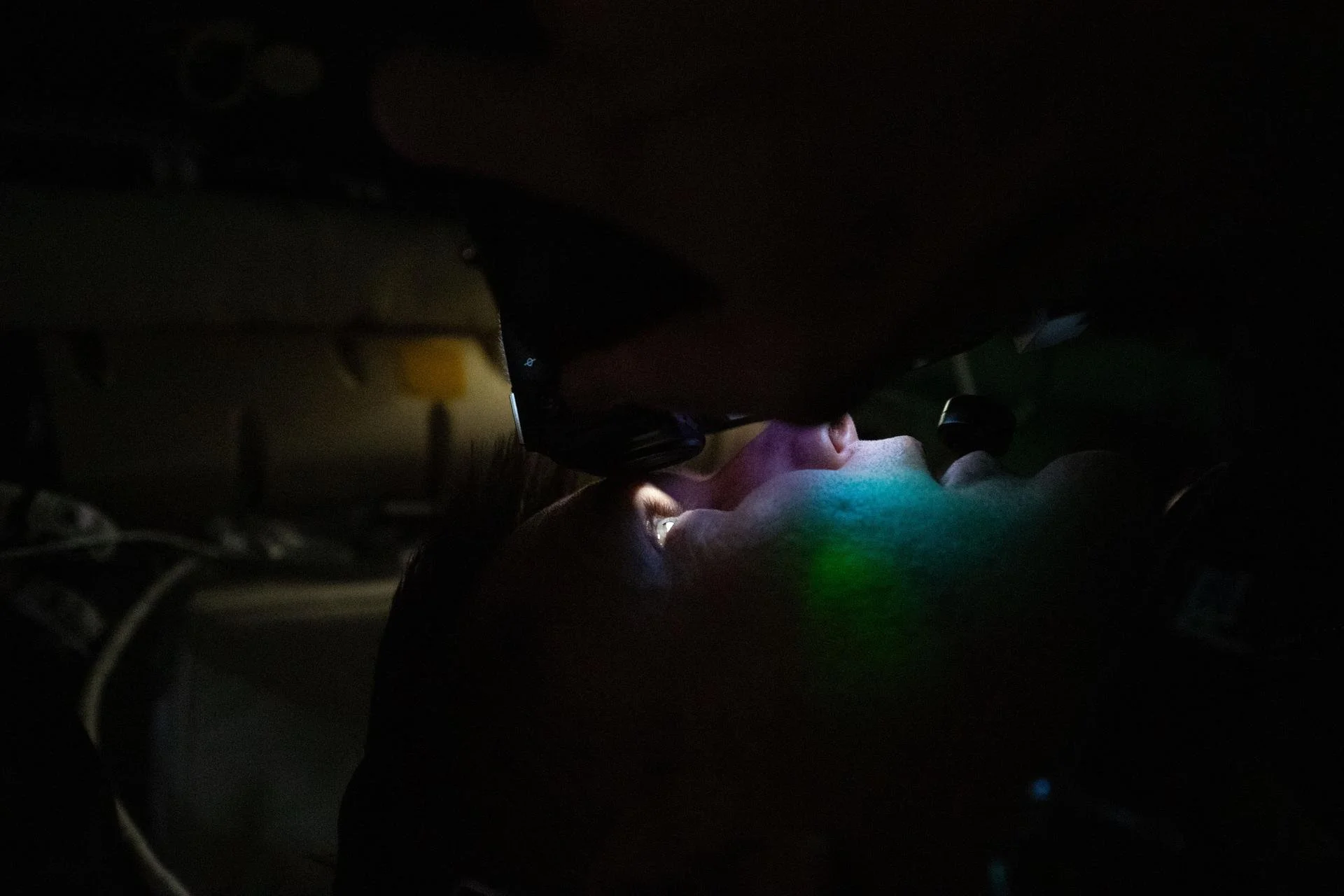
To view and download all images I’ve included as well as many, many more, go to NASA’s Artemis II media page here.
